




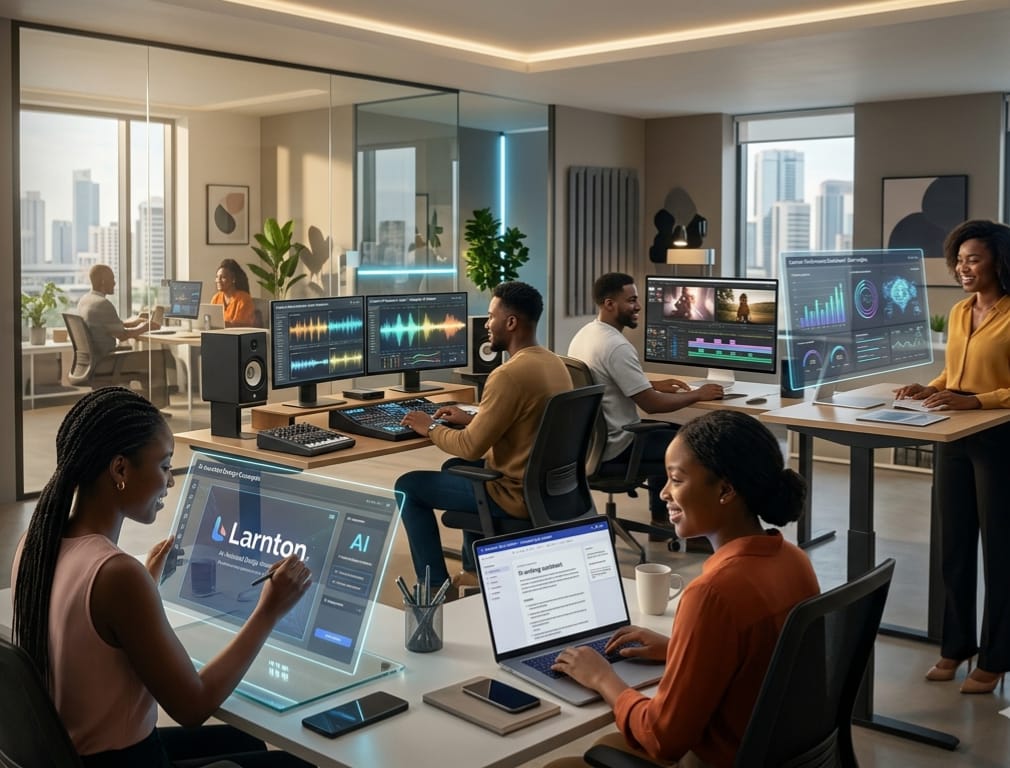
Artificial intelligence is no longer just a futuristic concept used by tech companies and research labs. In 2026, AI has become a powerful creative partner for businesses, designers, writers, musicians, marketers, filmmakers, and entrepreneurs around the world. From generating visual content to editing videos, composing music, automating workflows, and improving productivity, AI is reshaping how creative work is planned, produced, and distributed.
For creators and businesses, the conversation is no longer about whether AI will affect creative industries. The real question is how to use AI responsibly, effectively, and creatively while maintaining originality, quality, and human authenticity.
In this article, we explore how AI is transforming creative work in 2026, the opportunities it creates, the challenges professionals face, and practical ways individuals and businesses can adapt to the new creative economy.
The Rise of AI in Creative Industries
AI tools have evolved rapidly over the past few years. Early AI systems focused mainly on automation and data analysis, but modern AI platforms can now generate realistic images, write long-form content, edit videos, create voiceovers, compose music, and even assist with branding and product design.
Several factors have accelerated this transformation:
- Faster computing power
- Advanced machine learning models
- Better natural language processing
- Improved image and video generation systems
- Increased accessibility of AI tools
- Growing demand for digital content
Today, AI-powered creativity is being used by startups, large enterprises, freelancers, educators, and content creators across nearly every industry.
AI in Graphic Design and Visual Creativity
One of the biggest areas impacted by AI is graphic design. In 2026, designers now use AI-assisted platforms to generate concepts, improve layouts, remove backgrounds, create branding assets, and produce marketing materials faster than ever before.
How AI Is Helping Designers
AI tools can now:
- Generate logo ideas
- Create social media graphics
- Produce realistic illustrations
- Suggest color palettes
- Enhance image quality
- Create product mockups
- Generate website UI concepts
Instead of replacing designers, AI is increasingly functioning as a collaborative assistant. Designers still provide:
- Creative direction
- Brand understanding
- Emotional storytelling
- Strategic thinking
- Human judgment
AI mainly reduces repetitive technical work and speeds up ideation.
The Shift Toward Faster Creative Production
Businesses now expect faster turnaround times for digital content. AI allows creative teams to:
- Produce multiple design variations quickly
- Test visual campaigns faster
- Reduce production costs
- Improve personalization
For example, a business can generate dozens of ad creatives for different audiences within hours instead of days.
AI and the Future of Writing
Writing has changed dramatically with the growth of AI content tools. Bloggers, marketers, copywriters, and businesses now use AI to support:
- Research
- Draft creation
- SEO optimization
- Content planning
- Editing
- Translation
- Summarization
However, high-quality writing still depends heavily on human expertise.
What AI Does Well in Writing
AI is excellent at:
- Organizing information
- Generating outlines
- Suggesting headlines
- Creating first drafts
- Improving grammar
- Simplifying complex topics
This helps writers save time and focus more on creativity and strategy.
Why Human Writers Still Matter
AI-generated text can sometimes:
- Sound generic
- Miss emotional nuance
- Contain factual inaccuracies
- Lack originality
- Misunder cultural context
Professional writers remain essential because audiences still value:
- Authentic storytelling
- Personal experience
- Human emotion
- Expert insight
- Unique perspective
The best results in 2026 come from combining AI efficiency with human creativity.
AI in Music Production
Music creation is also evolving rapidly through AI technology. Modern AI tools can now:
- Generate melodies
- Create background music
- Produce beats
- Assist with mixing and mastering
- Clone voices ethically with permission
- Suggest chord progressions
Independent creators can now produce high-quality music from home studios with minimal equipment.
Benefits for Musicians and Creators
AI helps musicians:
- Experiment with new sounds
- Speed up production
- Generate inspiration
- Reduce technical barriers
- Improve workflow efficiency
For content creators, AI-generated background music has become especially useful for:
- YouTube videos
- Podcasts
- Social media content
- Advertisements
Ethical Concerns in AI Music
Despite the advantages, there are important concerns:
- Copyright disputes
- Unauthorized voice cloning
- Ownership of AI-generated songs
- Protection of original artists
In 2026, many platforms are introducing stricter transparency policies to ensure creators disclose AI-assisted content responsibly.
AI and Video Content Creation
Video remains one of the most powerful forms of digital communication, and AI is dramatically changing video production workflows.
AI-powered video tools can now:
- Generate video scripts
- Create animations
- Add subtitles automatically
- Translate voices into multiple languages
- Remove background noise
- Edit footage intelligently
- Generate realistic avatars
Faster Content Production
Businesses and creators can now produce:
- Marketing videos
- Educational tutorials
- Product demonstrations
- Social media reels
- AI-assisted documentaries
with much smaller production teams.
This has lowered the entry barrier for small businesses and independent creators.
Personalized Video Marketing
AI also enables hyper-personalized marketing campaigns. Brands can now create customized videos for different audiences based on:
- Location
- Interests
- Buying behavior
- Language preferences
This makes marketing more engaging and targeted.
AI in Business Creativity and Innovation
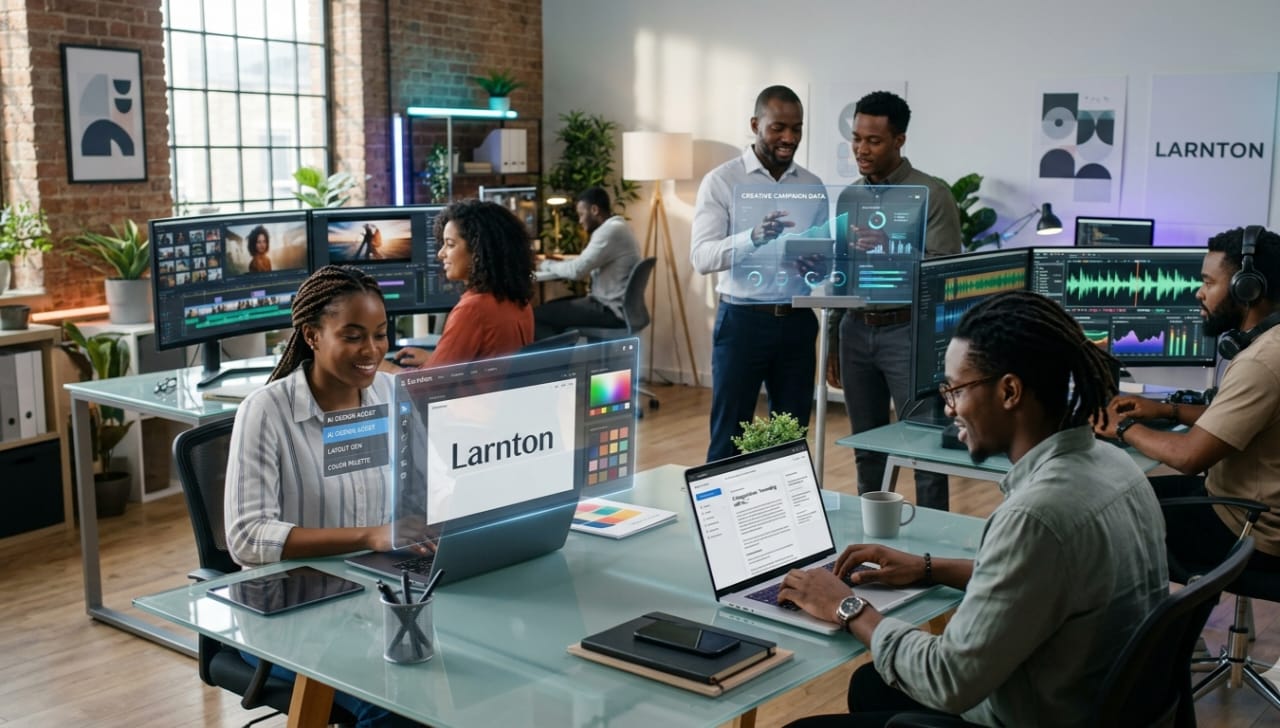
AI is not only affecting artists and creators. Businesses are increasingly using AI to improve innovation, branding, communication, and customer engagement.
How Businesses Use AI Creatively
Companies now use AI for:
- Brand identity development
- Marketing campaigns
- Customer support
- Product visualization
- Advertising optimization
- Social media management
- Content automation
AI allows businesses to operate faster while maintaining consistent communication across multiple platforms.
Smarter Decision-Making
AI systems can analyze trends and customer behavior, helping businesses make better creative decisions based on real data rather than guesswork.
This improves:
- Campaign performance
- Audience targeting
- Product positioning
- Customer experience
The Human Skills Becoming More Valuable
As AI automates technical and repetitive tasks, uniquely human skills are becoming even more important.
In 2026, the most valuable creative professionals are those who combine technical AI knowledge with human-centered abilities such as:
- Emotional intelligence
- Storytelling
- Critical thinking
- Creativity
- Strategy
- Communication
- Ethical judgment
AI can generate content, but humans still define purpose, meaning, and emotional connection.
Challenges of AI in Creative Work
Although AI offers many advantages, it also introduces serious challenges.
1. Copyright and Ownership Issues
Questions about who owns AI-generated content remain a major legal concern. Different countries and platforms have different policies regarding:
- Copyright protection
- AI-generated artwork
- Voice replication
- Training data usage
Creators must stay informed about evolving regulations.
2. Content Saturation
AI has made content production easier, which means the internet is becoming increasingly crowded with low-quality or repetitive material.
To stand out, creators must focus on:
- Originality
- Expertise
- Authenticity
- Real value
3. Job Displacement Concerns
Some repetitive creative tasks are becoming automated, particularly in:
- Basic graphic production
- Simple copywriting
- Routine editing
However, new opportunities are also emerging in:
- AI supervision
- Prompt engineering
- AI-assisted production
- Creative direction
- Digital strategy
How Creators Can Adapt in 2026
Instead of fearing AI, creative professionals should learn how to work alongside it effectively.
Learn AI Tools Strategically
Creators should explore AI tools relevant to their industry while understanding their limitations.
Useful areas to learn include:
- AI image generation
- AI writing assistants
- AI video editing
- Workflow automation
- SEO optimization
- Digital branding
Focus on Personal Branding
Human identity matters more than ever. Audiences increasingly follow creators because of:
- Personality
- Trust
- Expertise
- Unique perspective
Building a strong personal or business brand helps creators remain valuable even as AI tools become widespread.
Maintain Ethical Standards
Responsible AI use is essential. Creators should:
- Avoid misinformation
- Respect copyrights
- Disclose AI-assisted content when necessary
- Prioritize originality
- Verify factual accuracy
Ethical practices build long-term trust with audiences.
The Future of AI and Creativity
The future of creative work is not purely human or purely artificial. It is collaborative.
AI is becoming a powerful creative partner that helps people:
- Work faster
- Explore ideas
- Reduce repetitive tasks
- Improve productivity
- Expand creative possibilities
At the same time, human creativity remains irreplaceable because emotion, lived experience, culture, and imagination cannot be fully automated.
The creators who succeed in 2026 and beyond will be those who embrace AI thoughtfully while continuing to deliver authentic human value.
Final Thoughts
AI is transforming creative industries at an unprecedented pace. From design and writing to music, video, and business innovation, the technology is opening new opportunities for creators and companies worldwide.
However, successful creative work in 2026 is not about replacing humans with machines. It is about using AI as a tool to enhance human creativity, improve efficiency, and unlock new forms of expression.
For businesses like Larnton Smart Solutions and modern creators everywhere, understanding AI is no longer optional. It is becoming an essential part of staying competitive in the evolving digital economy.
The future belongs to creators who can combine technology with originality, strategy, ethics, and authentic human connection.